Insuring a Wine Collection: What Homeowners Policies Usually Miss
Thinking of insuring a wine collection? Most homeowners policies aren’t built for this, but professional storage is here to help.

Most people treat wine storage as a single category: keep it cool, keep it dark, and don’t disturb it too much.
That advice isn’t necessarily wrong, but it flattens a distinction that actually matters a great deal… the difference between storing a wine you’ll drink within the next few years and storing a wine you intend to hold for a decade or two.
Those are fundamentally different undertakings, even though they look similar from the outside, and treating them as the same thing is where a lot of long-term collections quietly run into trouble.
A bottle you plan to open within a year or two has a fairly wide margin for error. Minor temperature fluctuations, a slightly warm summer, or a stretch of inconsistent humidity probably won’t meaningfully change how that bottle tastes when you open it, simply because there isn’t enough time for small inconsistencies to compound into something noticeable.
A bottle you’re holding for ten or twenty years is a different proposition entirely.
Wine ages through a slow set of chemical reactions between acids, sugars, tannins, and the small amount of oxygen that moves through the cork over time, and temperature is what controls the pace of those reactions. At a steady 55°F, that process unfolds slowly and predictably. Every deviation from that consistency, even a small one, has years to compound rather than days, and the same fluctuation that would be harmless in a short-term hold becomes a real liability stretched across two decades.
This is the core reason short-term vs long-term wine storage aren’t just the same task performed for different lengths of time. The tolerance for imperfection shrinks as the intended hold gets longer, and what counts as “good enough” for a wine you’ll drink next year isn’t remotely good enough for one you’re planning to open in 2045.
For short-term storage, a wine fridge or a cool, dark closet is often perfectly adequate. The wine isn’t in the environment long enough for minor inconsistencies to meaningfully affect it, and the convenience of having bottles close at hand usually outweighs the marginal storage risk.
For long-term storage, several factors that were minor concerns for short-term holds become central. Consistency of temperature matters more than the exact number. Why? Because repeated swings cause the liquid inside the bottle to expand and contract, which over time, can compromise the seal between cork and glass.
The equipment most people use for short-term storage was never designed with a twenty-year hold in mind. These setups do a reasonable job of maintaining a target temperature under normal conditions, but they weren’t built with the redundancy, monitoring, or consistency that a genuinely long hold requires.
A compressor that runs a couple of degrees warmer than its thermostat suggests is a minor issue over a year and a real problem over fifteen. A door seal that’s been slightly compromised for months without anyone noticing barely matters for a bottle opened soon, but matters considerably for one that’s supposed to still be improving in 2040.
This is really the point where the distinction between short term vs long term wine storage stops being theoretical and starts changing what collectors actually need from their setup.
A collection made up entirely of wines meant to be consumed within a few years can reasonably stay in a home fridge. A collection that includes bottles meant to be held for decades needs an environment built specifically for that timeline.
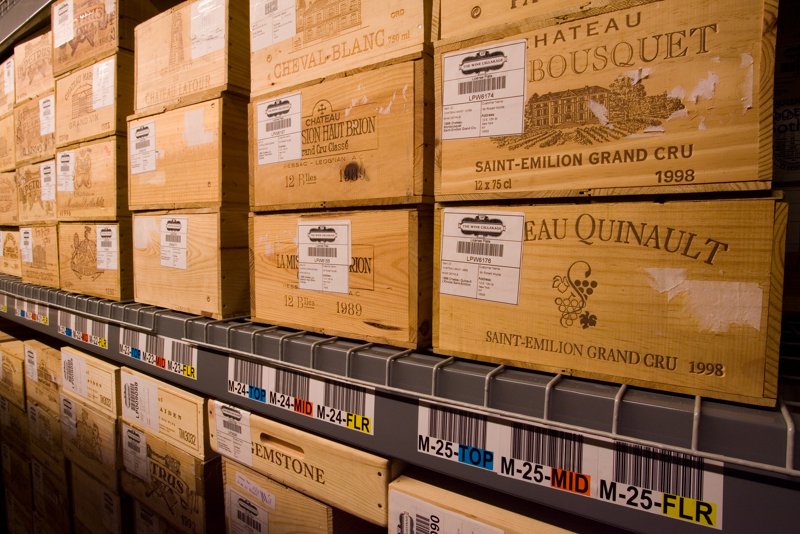
The Wine Cellarage’s storage program was built around exactly this distinction. The 22,000 square foot facility maintains temperature at a constant 55°F (13°C), with controlled humidity, protection from light and vibration, and 24/7 digital monitoring, conditions designed to hold steady not just through a season but through the years and decades a serious long-term hold actually requires. Every bottle is covered by insurance up to $25,000, addressing the coverage gap that becomes increasingly relevant the longer a wine sits in storage.
That long-term reliability extends into documentation as well. Storage clients can request photography of each bottle at intake, and the storage environment is tracked over time, all visible through The Wine Cellarage’s wine collection management platform. For a bottle you’re holding for the long run, that record becomes part of its value, particularly if you eventually decide to sell through the platform’s Christie’s integration.
The most useful exercise for any collector is going through their collection and being honest about which bottles fall into which category. Wines you’ll realistically drink within the next few years can stay wherever’s convenient.
Wines you’re genuinely planning to hold for a decade or more deserve an environment built for that timeline specifically, not a setup that happens to be adequate for the short term and gets asked to do more than it was designed for.
The distinction isn’t about being precious with every bottle in the house. It’s about recognizing that a twenty-year hold and a two-year hold are different commitments, and giving each the kind of storage it actually requires rather than treating every bottle in the collection the same way.
Thinking of insuring a wine collection? Most homeowners policies aren’t built for this, but professional storage is here to help.

Temperature gets all the attention in wine storage, but wine humidity is just as critical. Here’s what goes wrong when it’s not controlled.

When your futures allocation finally arrives, where it goes first matters. Professional storage should be step one of storing wine futures.