
Insuring a Wine Collection: What Homeowners Policies Usually Miss
Thinking of insuring a wine collection? Most homeowners policies aren’t built for this, but professional storage is here to help.

There’s a natural arc to wine collecting. It usually starts with a few bottles you want to hold onto, a corner of a closet or a small wine fridge, and the vague sense that you should probably be more careful about temperature. Then the collection grows. The fridge fills up. You start stacking cases in the basement. And at some point, a quiet concern sets in: is what I have actually being stored the right way?
If you’re reading this, you may already be there. The good news is that the signs your collection has outgrown your home setup are pretty clear — and so are the wine storage options available to you. This post walks through both.
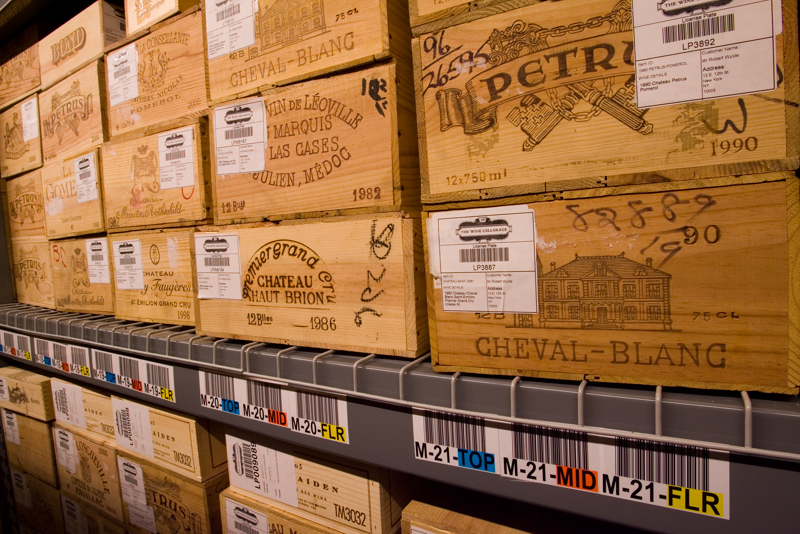
The most obvious sign is also the most common. Wine fridges and dedicated home cellars have fixed capacity, and collections have a way of expanding faster than the storage meant to hold them. When you’re stacking cases in places that weren’t designed for wine — against a garage wall, in a spare bedroom, or wherever they’ll fit — you’ve already crossed a line worth paying attention to.
The problem isn’t about aesthetics, though that certainly can be a factor. Wine stored outside a purpose-built environment is exposed to variables that can affect quality: temperature swings from heating and cooling systems, vibration from foot traffic or nearby appliances, and light exposure that can accelerate aging in ways you won’t notice until you open a bottle and find it’s past its prime. Space constraints push wine into those environments.
Wine needs to be stored at a consistent 55°F with humidity in the range of 60 to 70 percent. Not occasionally. All the time.
Most home environments can’t deliver this reliably. A residential wine fridge might hold 55°F when it’s running well. Compressor cycling, though, causes small fluctuations, and a fridge that’s too full doesn’t circulate air properly. Basements vary seasonally. Areas near exterior walls shift with outdoor temperatures. Even purpose-built home cellars can struggle with humidity control, particularly in climates with harsh winters or summers.
The danger is that temperature fluctuations, even minor ones, cause wine to expand and contract inside the bottle. This stresses the cork, can allow air in, and accelerates oxidation. A wine that should age beautifully for another decade can be quietly degraded by years of inconsistent conditions that are invisible until you open it.
If you don’t have a continuous temperature and humidity monitor on your home storage and haven’t been tracking the data over time, you genuinely don’t know what your wine has experienced.
This one surprises a lot of collectors. Most homeowner’s and renter’s insurance policies don’t cover wine as a collectible at replacement value. If your home experiences water damage, a power outage that kills your wine fridge, a fire, or theft, the bottles you’ve accumulated over years may not be covered for what they’re actually worth.
The gap between what a standard homeowner’s policy pays and what your collection is actually worth can be significant, especially if you’ve been buying seriously for any length of time. Fine wine insurance is a specialized product, and it requires accurate valuation — which most collectors haven’t done recently, if ever.
Among the wine storage options available through The Wine Cellarage, insurance is built directly into the New York storage program, covering collections up to $25,000. Connecticut clients can add coverage. Either way, your collection is protected at a level that home storage simply doesn’t offer without a separate, actively managed policy.
This is more common than collectors like to admit. When a collection reaches a certain size, the mental inventory breaks down. You know roughly what’s there, but you’re not sure which bottles are approaching their drinking window, which have already passed it, or what the current market value of the cellar looks like as a whole.
Drinking a bottle past its peak is a disappointment. Drinking an investment-grade bottle before it’s reached its potential is a real loss. And not knowing what your collection is worth makes it impossible to make smart decisions about when to sell, what to add, or how to think about the cellar as part of your financial picture.
A disorganized collection is also a collection that’s harder to insure accurately and harder to prove provenance for if you ever want to sell through an auction house or retailer.
If you’ve developed a nagging uncertainty about whether your bottles are actually in good condition. If you hesitate before opening something special because you’re not sure what you’ll find, that anxiety is telling you something. It means you don’t fully trust your storage conditions. And if you don’t trust your conditions, the collection isn’t serving the purpose it was meant to.
Wine collecting is supposed to be pleasurable. That means opening great bottles with confidence, not crossing your fingers.
When collectors start seriously comparing wine storage options, professional storage addresses every one of the issues above in a way that home setups typically can’t.
The main wine storage options most collectors consider are continuing to store at home, upgrading home storage with a better fridge or purpose-built cellar, or moving to professional off-site storage.
Upgrading home storage makes sense at a certain scale. But for collectors whose wine represents real value? The ones who want clean documentation, and need insurance? Professional storage isn’t a luxury upgrade. It’s the appropriate solution.
Thinking of insuring a wine collection? Most homeowners policies aren’t built for this, but professional storage is here to help.

Temperature gets all the attention in wine storage, but wine humidity is just as critical. Here’s what goes wrong when it’s not controlled.

When your futures allocation finally arrives, where it goes first matters. Professional storage should be step one of storing wine futures.