
Insuring a Wine Collection: What Homeowners Policies Usually Miss
Thinking of insuring a wine collection? Most homeowners policies aren’t built for this, but professional storage is here to help.

Most collectors never think about how a power outage affects wine until it happens. The electricity goes out, the wine fridge goes dark, and suddenly the question isn’t abstract: how long does it take for the temperature inside to climb, and what does that actually do to the wine?
The answer is more nuanced and more serious than most people assume.
A wine fridge is an insulated box, not a true climate-controlled environment. When the power cuts, the compressor stops running and the internal temperature begins to rise. How fast depends on the quality of the insulation, the ambient temperature of the room, and how full the fridge is. Fuller fridges hold temperature longer because the thermal mass of the bottles helps stabilize the environment.
In a climate-controlled home during mild weather, a well-insulated unit might hold temperature for several hours. In a warm room, or during summer, the rise can be faster. If you’re away and the outage lasts 12, 24, or 48 hours, the temperature inside can easily climb into the 70s or higher.
A single warm event won’t ruin most wines, but it’s something to consider all the same.
Wine ages through a slow series of chemical reactions between acids, sugars, tannins, and the small amount of oxygen that passes through the cork over time. Temperature is the throttle on those reactions. At 55°F, the process is slow and controlled. As temperature rises, the reactions accelerate.
A brief spike to 70°F for a few hours is unlikely to cause catastrophic damage, but repeated exposure, multiple outages, or a compressor that runs warmer than its thermostat indicates? That compounds. Wines will age faster than intended, developing prematurely in ways that can’t be reversed.
For wines you’re holding for 10 or 20 years, the fluctuations in a single event isn’t something to be too concerned about. Rather, it’s the accumulation of events over the holding period, none of which you may be aware of if your storage isn’t monitored.
There’s also the question of thermal shock where rapid temperature swings, particularly repeated ones, can affect the expansion and contraction of the liquid inside the bottle. Over time this can compromise the seal between cork and glass – a big reason consistent temperature matters more than the exact number.
When the power goes out at home, you’re likely to notice quickly if you’re there. But if you’re traveling, at work, or simply not paying attention to the fridge? You may not know it even happened until you open a bottle and something seems off. By then, there’s no way to know how long the temperature climbed or how high it went.
Even if you notice immediately, your options are limited. You can open the door as little as possible to retain cold. You can move bottles to a cooler if you have enough ice. You can try to get a generator running. None of these options are reliable for a collection of any size.
Home wine storage, by design, depends on a single point of failure: the appliance. If it stops working whether from a power outage, a compressor failure, a thermostat malfunction, or a door seal that’s been slightly compromised for months without your knowledge — there’s no backup.
A proper wine storage facility doesn’t rely on a single appliance. The infrastructure is redundant by design.
The Wine Cellarage’s facilities maintain temperature at a constant 55°F through commercial-grade climate control systems, not consumer appliances. The entire facility is monitored digitally 24 hours a day. That means if a temperature deviation occurs at 3am on a Tuesday, the team is alerted and responds.
Backup systems exist specifically for power loss scenarios. As a commercial facility, we can’t afford a single point of failure any more than any other industry can, and the infrastructure has to reflect that.
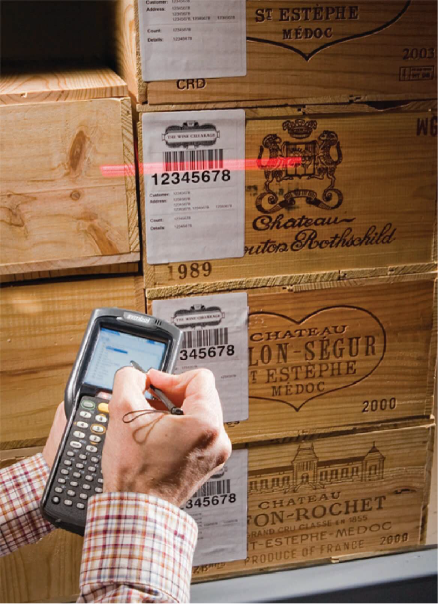
Beyond the physical, there’s the documentation layer. Every bottle stored with TWC is cataloged, with its storage environment tracked over time. If you ever want to sell a bottle through auction, the Christie’s integration is built directly into the collection management platform with the provenance record showing continuous, documented professional storage.
That history has measurable value at auction, and a power outage at home, even one that didn’t cause obvious damage, is exactly the kind of gap in provenance that sophisticated buyers notice.
If you’re currently relying on home storage for wines you care about, a few practical steps reduce your risk:
A power outage is one of those risks that feels unlikely until it happens. And for home wine storage? It’s a risk with no real mitigation. Just a single appliance standing between your collection and the ambient temperature of whatever room it’s sitting in.
Professional storage doesn’t solve every risk, but it solves this one completely. If you’re in New York or Connecticut and want to talk through options for your collection, the storage team at TWC is a good place to start.
Thinking of insuring a wine collection? Most homeowners policies aren’t built for this, but professional storage is here to help.

Temperature gets all the attention in wine storage, but wine humidity is just as critical. Here’s what goes wrong when it’s not controlled.

When your futures allocation finally arrives, where it goes first matters. Professional storage should be step one of storing wine futures.